Pages

Friday, August 14, 2020

Capillary Action Science Report

 Hello Bloggers, 

For literacy, we have been learning about capillary action. We had to conduct an experiment where we would try 3 different liquids with food colouring in it and then see how far up the liquid would go up the veins. Here is my report and see ya.

Capillary Action


Questions:

  • To the plants take in the water straight away when it comes into contact or does it wait

  • How do the plants take in the vitamin d from the sun


Research Summary:

Capillary action is very interesting as we use straws to suck water or whatever up, plants do pretty much the same thing. The plants use cohesion as it can make the water go up when you would think that gravity would be pulling it down. 


Adhesion is when something is the ability to stick to something and choose how sticky it is. With adhesion, a water molecule is trying to get up a wall, and it needs the other particle to get up that wall as the molecules are stronger together. 


Surface tension it the other word in capillary action. If you see a leaf floating on the water, and you push the edge down, the whole leaf completely sinks, and the leaf is no longer floating on the water.


Hypothesis

I think that the coloured water will go up the celery stalk faster than the other liquids eg: white vinegar and sprite (lemonade).


Materials:

  • Beakers

  • Food Colouring

  • Sprite

  • White Vinegar

  • Water


Procedure:

  1. Colour the liquids with food colouring in your measuring beaker

  2. Set a 2-minute timer and place the celery into the water

  3. Once the timer has finished, record the height of the coloured veins and also record what colour the veins are. Repeat this sequence two more times so the total time is 6 minutes

  4. After 6-minutes, chop the end of the celery that has not been in the liquid and chop it until you see colour

  5. Measure the final vein and record your results


Observations/Results:


Climbing

2 Minutes

4 Minutes

6 Minutes

Colour

2 Minutes

4 Minutes

6 Minutes

Water Climb

0.5cm

1cm

3.5cm

Water Colour

Red

Red

Red

Vinegar Climb

1cm

1cm

1cm

Vinegar Colour

Red

Red

Red

Sprite Climb

2cm

1cm

1cm

Sprite Colour

Red

Red

Red


Discussion:

For the sprite experiment, the sprite did not climb up the veins very far as that porous. It only went up a couple of centimetres. It was very cool though to see it come up the veins. 


For the 2nd liquid, the water went way better as the results beat all of the others and came up that veins way higher than the other liquids. I think the reason why the water was better because it is more natural than the sprite. 


The vinegar experiment went pretty well even though the vinegar tasted terrible. It climbed not very high but it looked way cooler than all of the others.


Conclusion:

In conclusion, it didn’t turn out as I expected but it was still pretty cool when it climbed up the celery veins. Maybe next time we could use paper and see how high that climbs.


Monday, August 3, 2020

Capillary Questions

Hello Bloggersa

Friday, July 31, 2020

Science - Acids and Bases

Hello Bloggers, 

For literacy, we have been learning about acids and bases. We got to do some cool science experiments and we had to create a science report on science experiments. Here is my science report and see ya.

Acids and Bases


Questions:

  • What are the properties of acids and bases in the water?


Research Summary:

Acids and bases are in everything around us even in water. The scientific name for water is h2o. The h stands for hydrogen, the 2 stands for 2 hydrogens and the 0 stands for the oxygen. Now these are all connected, for example, if you have tasteless water and it is bland then all of the molecules are connected but they do disconnect and it will taste bitter, that is when it is more of a base than acid, but if there are too much-disconnected molecules than it is more of an acid.


Hypothesis


Hypothesized pH

5

1

8

6

9

10

Chemical Product

Sprite

Ammonia

White Vinegar

Lemon Juice

Alcohol

Baking Soda


-Materials:

We used:

  • Cabbage Juice - as the solution indicator

  • Sprite

  • Ammonia

  • Lemon Juice

  • Alcohol (Hand Sanitizer)

  • White Vinegar

  • Baking Soda

  • Test Tubes

  • Pipettes

  • Teaspoons

Procedure:

Set aside your indicator solution. You will use it as your "stock" solution for your experiments.

Next, you will test various household solutions with your indicator.  Use one beaker for each solution you want to test because you do not want to mix chemicals that do not go well together or contaminate your results.

Place an equal portion of indicator solution and the test liquid (eg. Vinegar) into a beaker.  Use a pipette to measure this.

Add drops of a liquid you want to test until you see the solution change in colour. Gently swirl the cup as you add the drops, being careful not to spill the solution.

Record the observed pH and a description of 

each solution in a data table in your lab notebook.

Analyze your results. How does the pH of the different household items you tested compare to each other? Are you surprised by any of your results?


Observations/Results:


Actual pH

3

11

3

2

6

8

Observed Colour

Violet

Green

Pink

Red

Purple

Blue

Chemical Product

Sprite

Ammonia

White Vinegar

Lemon Juice

Alcohol

Baking Soda


Discussion:

For the baking soda experiment, it reacted differently. The baking soda absorbed some of the cabbage juice and made it turned into a light blue, but the leftover that was sitting on top, it turned a dark blue.


With the Alcohol, we used hand sanitizer so it also was different from the other experiments. Hand sanitizer is quite gluggy, so it floated up to the top and some of it still stayed the same only if you didn’t stir it around. 


Now with the ammonia, it reacted completely differently. As soon as we tipped the cabbage juice into the ammonia, it foamed up fully and then it calmed down and then changed colour completely. 


Conclusion:

For this experiment, all of the chemicals reacted really differently and worked perfectly perfect. It wasn’t what we all expected but it worked very well as we got a lot of evidence.


Friday, July 24, 2020

Allergic Shopping List / Space Tic Tac Toe

Hello Bloggers, 

For Wednesday activities, we had to create a shopping list. We had a budget of $170 and we had to feed 4 people but there was a catch. Steve had no allergies, George was dairy-free, Patricia was gluten-free and Dave was vegan. Here is a slide with my list. 


For Inquiry, we have been learning about space. We had to complete 3 tasks about space. Here is one of mine for the week and later. This is about astronauts everyday life.

Astronauts Everyday Life

How they go Toilet
Astronauts can urinate into a long tube with a vacuum system sucking away the waste or they can sit down on a special space toilet

How they Shower
On the International Space Station, astronauts do not shower but rather use liquid soap, water, and rinseless shampoo. They squeeze liquid soap and water from pouches onto their skin. Then they use rinseless soap with a little water to clean their hair

Can they Charge Devices
It has no phone number in the traditional sense, and astronauts have to leave their smartphones at home. For private calls, the space station has an internet-connected phone system that works through a computer, which astronauts can use to call any number on Earth. Phones on the ground cannot call them back.

How do they Sleep on the Ship
Space has no "up" or "down," but it does have microgravity. As a result, astronauts are weightless and can sleep in any orientation. However, they have to attach themselves so they don't float around and bump into something. Space station crews usually sleep in sleeping bags located in small crew cabins.

Friday, July 3, 2020

Aurora Lights

Hello Bloggers, 

For inquiry, we have been learning about the southern and northern lights. Here is some information below. 

All religions have different about what causes the lights, the Chinese believe that it is the good and evil dragons fighting in the heavens etc. What actually causes it is that flares of the sun shoot at the Earth, but the Earth's molten core is pretty much a magnet so it fends it off but some get through and teams up with the oxygen and carbon atoms and creates the lights. Here is my artwork.


Also for inquiry, we have been creating some ironic artwork about a global issue. I chose racism. Here is a blurb below about racism and below is a picture of my art. 

I chose this because I really believe that we can all unite as one race if we aren’t the same colour skin. It is really unfair that black people get treated differently from white people.


The thing is though, what did the other colour race do to make them hate the other race, it is just very stupid. It just shows how messed up the world is. 

Monday, June 22, 2020

Avengers Endgame

Hello Bloggers, 

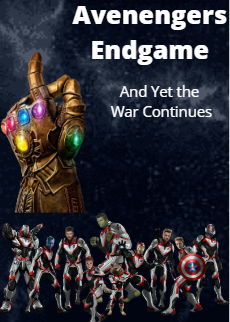
For literacy, we have been learning about finding themes in movie posters or book covers. So we ended up having to create a movie poster of our own with our favourite movie. I chose Avengers Endgame, look below for my description and poster and ENJOY.


The poster that I made represents family and teamwork as the Avengers are the strongest together.

They all have different skillsets and mindsets like Thor is the god of thunder but Tony Stark is a billionaire with a robot for his self-defence and his amazing tech.


The background also represents the main place where all of the events happen.


The gauntlet represents Thanos and the power that he has with all of the stones. It also means that Thanos and the Avengers will face off.


Friday, June 19, 2020

Binary / ASCII

Hello Bloggers, 

Today we are learning about Binary and ASCII.  

Binary is a number system that uses 1’s and 0’s to represent all of our normal set of numbers.  You can use the place values as multiples of 2 to work out how to do it for yourself!  


ASCII is a set of encoded symbols that a computer uses to turn Binary into letters and other symbols from the English language (like what is on our keyboard).  I turned my initials into binary numbers, and then turned those binary numbers into an ASCII code!  Using colours to represent the 1’s and 0’s, my initials in ASCII can be represented by the pattern you see in my image below!  


What do you think?  Have you ever tried encoding anything in binary or ASCII?  Could you have a try for yourself?  Can you work out how to write my initials in ASCII from the pattern above?